Excursion
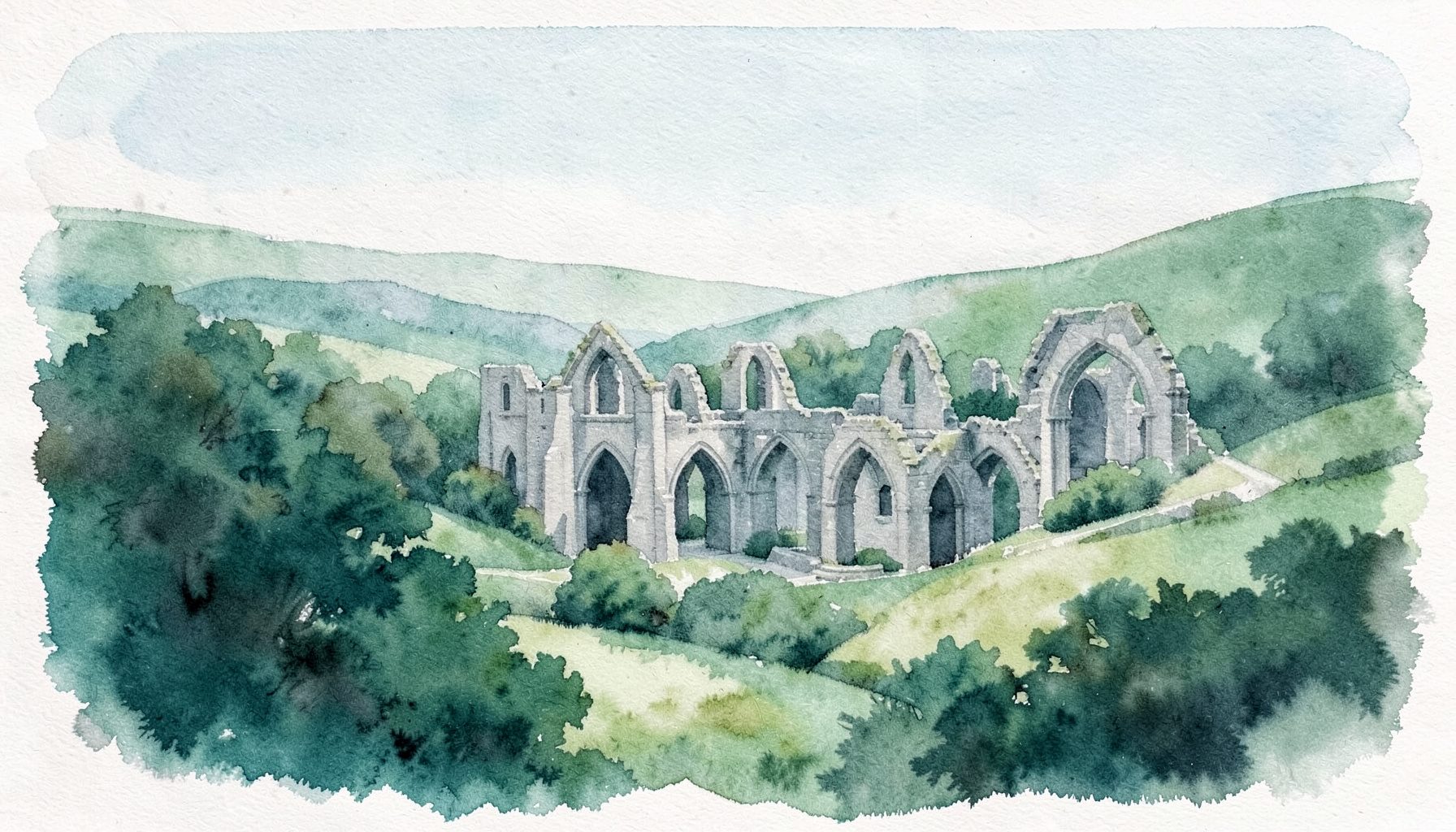
The BARS 2015 conference included an excursion to Tintern Abbey, held on Saturday, 16 July 2015. Delegates visited the historic ruins in the Wye Valley, a site of profound significance for Romantic writers and artists.
Digital Reader
A Digital Reader prepared by Dr Jamie Castell and Dr Maximiliaan van Woudenberg was made available to delegates on 13 July 2015. The reader provided contextual material to enrich the excursion experience, drawing on literary and historical sources connected to Tintern Abbey and its place in the Romantic imagination.
About the Excursion
Tintern Abbey, founded in 1131, became one of the most celebrated sites of Romantic tourism following William Wordsworth's “Lines Written a Few Miles above Tintern Abbey” (1798). The excursion offered conference delegates an opportunity to explore the abbey ruins and surrounding landscape that inspired generations of Romantic writers, artists, and travellers.
The excursion to Tintern Abbey offered delegates a chance to experience firsthand a landscape that profoundly shaped Romantic-era literature and thought. As one of the most celebrated ruins in the British Isles, the abbey inspired generations of writers who found in its weathered stones a powerful emblem of transience, imagination, and the passage of time. Walking the same grounds that once moved poets and artists to reflect on nature, history, and human feeling, conference participants were able to connect scholarly discussion with the living cultural heritage of the Romantic period. This immersive journey into the Wye Valley deepened the conference theme of imprints, tracing how place leaves its mark on creative expression.
The Digital Reader prepared for the excursion exemplifies how Romantic studies continue to evolve through new scholarly methods. By gathering contextual materials from literary and historical sources, the reader enabled delegates to approach Tintern Abbey not merely as a tourist site but as a text to be interpreted from multiple perspectives. This integration of digital resources with traditional fieldwork reflects the broader emergence of interdisciplinary approaches within Romantic scholarship. Such tools help illuminate how the consolidation of national and regional identities during the Romantic period was intertwined with antiquarian interests, publishing cultures, and the changing European political landscape, all of which left lasting imprints on the literature and art of the era.